
Video · coming soon
From the eye to the face: a short history
1934: found in the eye
Two scientists in New York, Karl Meyer and John Palmer, found it in the clear jelly inside cows’ eyes.1
They named it from two words. Hyaloid means glassy, an old name for that jelly. Uronic acid is one of its parts.
Later, it was found all over the body: in skin, in joints and in the eye.
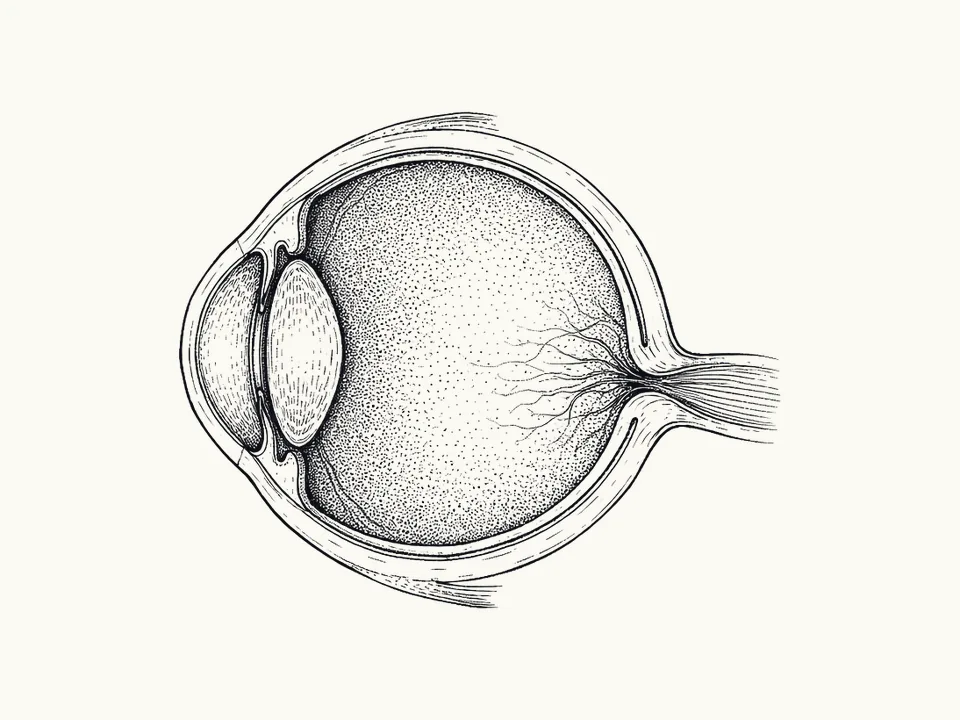
Around 1980: eye surgery
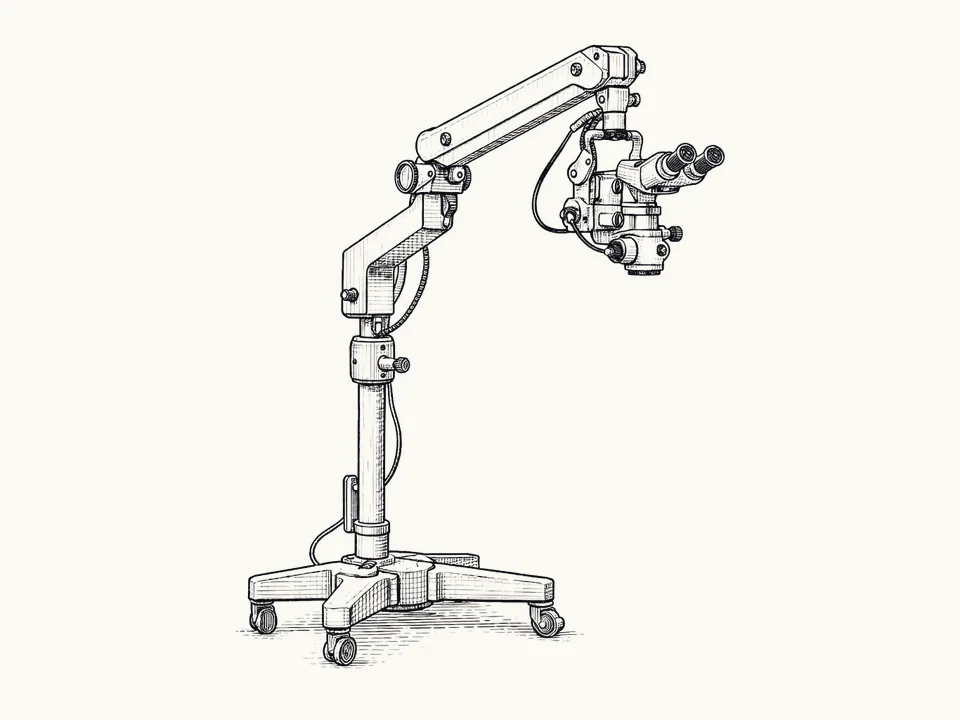
Its first medical use was in the eye. A scientist called Endre Balazs made a pure, thick form. Surgeons used it to protect the eye during cataract operations. It was on sale by around 1980.2
1981: the first fillers were collagen
The first filler for the face, approved in the US in 1981, was made from cow collagen.3 Because it came from an animal, people needed an allergy test first. It only lasted a few months.

1996: hyaluronic acid filler arrives
In short It lasted longer, needed no allergy test, and could be dissolved.
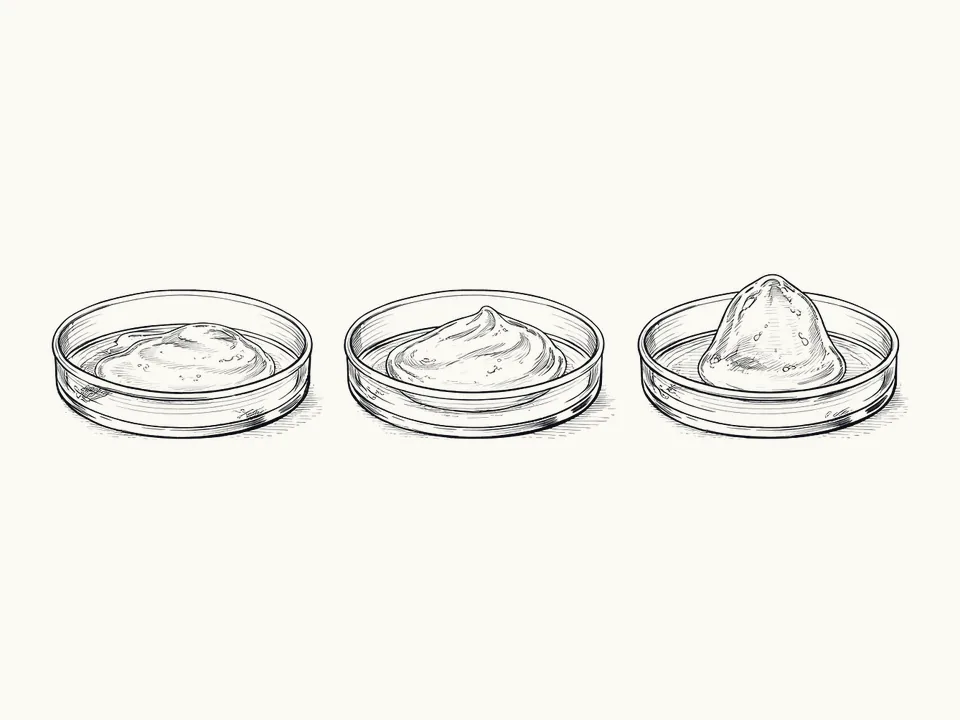
Scientists joined hyaluronic acid into a gel that lasts. The first gel of this kind went on sale in Europe in 1996. The US approved it in 2003.3
Hyaluronic acid is the same in every animal and in people. So no allergy test is needed.
And it can be dissolved. That means a result can be undone, and a blocked blood vessel can be treated. That is why the medicine that dissolves it is in the clinic every time filler is given.

Today
Most filler in the UK is made of hyaluronic acid. Some gels are firmer than others. That is why filler lasts 6 to 18 months, depending on the product and where it goes. See dermal filler, explained.
References
- Meyer K, Palmer JW. Journal of Biological Chemistry 1934;107:629–634.
- Balazs EA, and the history of ophthalmic viscosurgical devices: American Academy of Ophthalmology, Scope, “How viscoelastics gained ophthalmic acceptance”; Harvard Medical School Department of Ophthalmology, “Endre A. Balazs, MD”.
- Reviews of the history of dermal fillers, including MDedge Dermatology, “Update on hyaluronic acid fillers for facial rejuvenation”; and the manufacturer’s own account of the first stabilised hyaluronic acid filler (Galderma, 2021).